September 11, 2026
Measuring Sustainable Social Impact: Applying SROI to Food Security Initiatives for Dryland Farmers
The compounding impacts of climate change and unpredictable rainfall patterns [...]
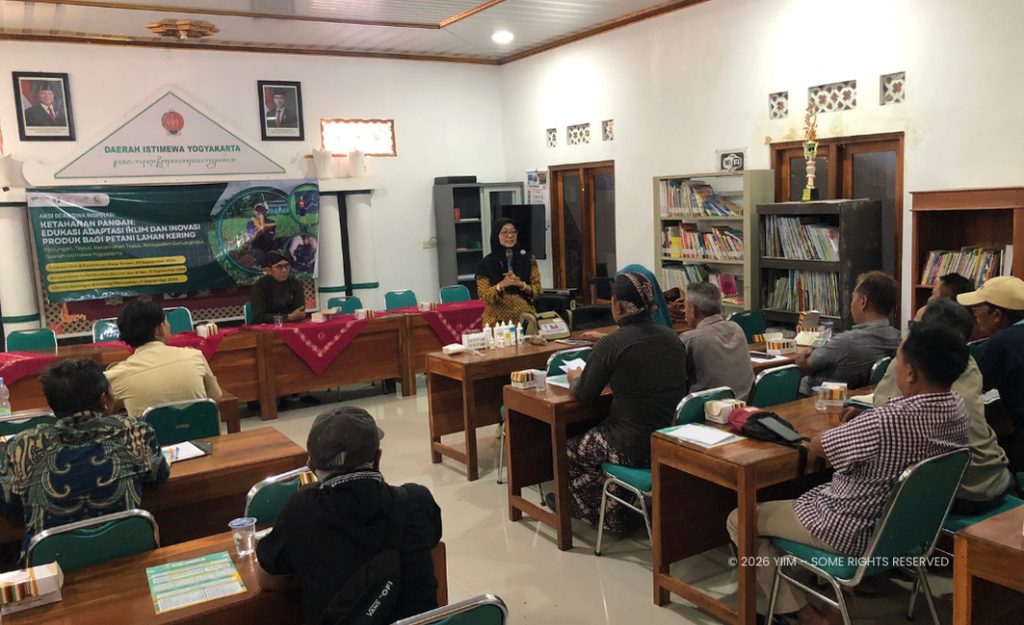
The compounding impacts of climate change and unpredictable rainfall patterns pose escalating challenges to farming communities in karst highland landscapes. In arid territories such as Tepus Hamlet, Gunungkidul Regency, shifting weather anomalies and heavy dependence on synthetic agricultural inputs frequently jeopardize crop consistency and the long-term economic well-being of farming households.
To confront these structural hurdles, the Inspiration Scholarship Action organized a comprehensive three-day training program entitled “Food Security: Climate Adaptation Education and Product Innovation for Dryland Farmers,” held from September 9 to 11, 2026. The initiative seamlessly combined applied climate science, eco-friendly appropriate technology, and household financial stewardship.
Evaluating Tangible Change Through the SROI Framework
In establishing rigorous accountability and maximizing the long-term efficacy of community empowerment programs, the Social Return on Investment (SROI) framework serves as a cornerstone methodology. Unlike standard financial audits that account solely for monetary profits, SROI provides a holistic measurement of the broader social, environmental, and economic value generated for every unit of currency invested.
Applying the SROI methodology to the Tepus farming community allows for the quantification of systemic transformations across several vital indicators:
- Reduction of Operational Input Expenditures: Gaining self-sufficiency in manufacturing organic kasgot (maggot residue) fertilizer and fermented silage livestock feed reduces farmers’ reliance on commercial inputs by more than 40 percent.
- Mitigation of Climate-Induced Yield Losses: Practical mastery of local soil moisture cycles and precision planting schedules dramatically lowers harvest failure rates across rain-fed arable plots.
- Circular Upcycling of Organic Waste: Transforming agricultural byproducts into organic soil conditioners naturally revitalizes fragile limestone topsoil without chemical contamination.
- Strengthened Household Financial Resilience: Hands-on coaching in basic bookkeeping and value-chain marketing equips agricultural households to capture fair market margins and manage revenue systematically.
Synergizing Climate Resilience, Innovation, and Financial Literacy
The three-day curriculum deployed a structured, progressive learning pathway. Day one engaged participants in localized agroclimatic assessments and water conservation techniques. Day two transitioned into intensive workshops on biomass composting and silage fermentation to safeguard cattle fodder reserves during severe dry spells.
The program culminated on September 11, 2026, with focused sessions on financial literacy and strategic market positioning, empowering participants to calculate unit production costs, maintain cooperative ledger records, and safeguard the sustainability of their agrarian ventures.
“Authentic empowerment transcends temporary material donations; it thrives when communities master the sustainable stewardship of their local environment. Through SROI evaluation, we demonstrate that social investments in dryland farmers generate multiplying social and economic dividends across generations.”
This collaborative milestone was made possible through the continued partnership of PT Insight Investments Management (INSIGHT), demonstrating a steadfast commitment to aligning social investment with the United Nations Sustainable Development Goals (SDGs), notably No Poverty (SDG 1), Zero Hunger (SDG 2), Decent Work and Economic Growth (SDG 8), Responsible Consumption and Production (SDG 12), Climate Action (SDG 13), and Partnerships for the Goals (SDG 17).
Salam Inspirasi!
Additional Photo Documentation